
First published in RoSoft Notes on LinkedIn on 24 June 2026. Figures and market references are as of that date.
In short
Legal AI specialists such as Harvey and Legora are priced as if they already own a durable moat, and the market's structure doesn't support that. Their combined value of roughly $16.6bn is about three and a half times the whole market's annual revenue. Yet they rent both the models and the legal content, and only the contested workflow layer in the middle is theirs.
- On 3 February 2026, after Anthropic added legal capabilities to Claude, Thomson Reuters fell around 18% and somewhere near 50 billion dollars left the legal and information publishers.
- Harvey went from a 3 billion dollar valuation in February 2025 to 11 billion in March 2026, and Legora went from 675 million dollars to 5.55 billion in ten months.
- Harvey scrapped its own fine-tuned legal model in 2025 when frontier models got good enough to make it redundant.
- Harvey licenses its authoritative content from LexisNexis, which is also its investor and, through its Protégé product, its competitor.
- Harvey is reportedly near 300 million dollars of ARR and Legora around 100 million.
A personal take on Harvey AI, Legora, and the three-front war that will decide who survives the next 24 months.
By Mohsin Qadir · Personal opinion · Not investment advice
On the afternoon of 3 February 2026, I was halfway through a strategy call when my phone started buzzing. Not with messages with price alerts. Thomson Reuters was down around 18%. RELX, the parent of LexisNexis, had just printed its steepest single-day fall since 1988. Wolters Kluwer, roughly 13% lighter. By the close, somewhere near 50 billion dollars had evaporated from the market value of the world's legal and information-publishing giants. The trigger was not an earnings miss. Not a fraud. A software company had shipped a plug-in.
Anthropic had quietly added legal capabilities to Claude. The market took one look and decided that the moats these century-old institutions had spent decades building might be made of sand. I remember staring at the screen and thinking: I have sat in a dozen rooms this past year being pitched the future of legal AI, and not one of those pitches prepared me for the speed of this.
That afternoon crystallised something I had been circling for months. So I am going to say the quiet part out loud, and I suspect it will annoy a few people I respect: some of the most celebrated companies in enterprise software right now the legal AI darlings may also be among the most structurally fragile. And I say that as a genuine admirer of what they have built. Let me show you why.
The number that should keep investors up at night
Start with one uncomfortable fact. As of March 2026, Harvey is valued at 11 billion dollars. Legora the Stockholm challenger that did not exist three years ago is valued at 5.55 billion. Together, that is roughly 16.6 billion dollars of enterprise value sitting on two companies.
Now ask the obvious follow-up: how big is the market they sell into? Depending on which analyst you believe, the entire legal-AI software market generates somewhere between 3 and 6 billion dollars in annual revenue today. Call it four and a half.
Two startups carry an enterprise value of roughy three-and-a-half times the entire annual revenue of the market they compete in. Not three-and-a-half times their own revenue three-and-a-half times everyone's revenue combined.
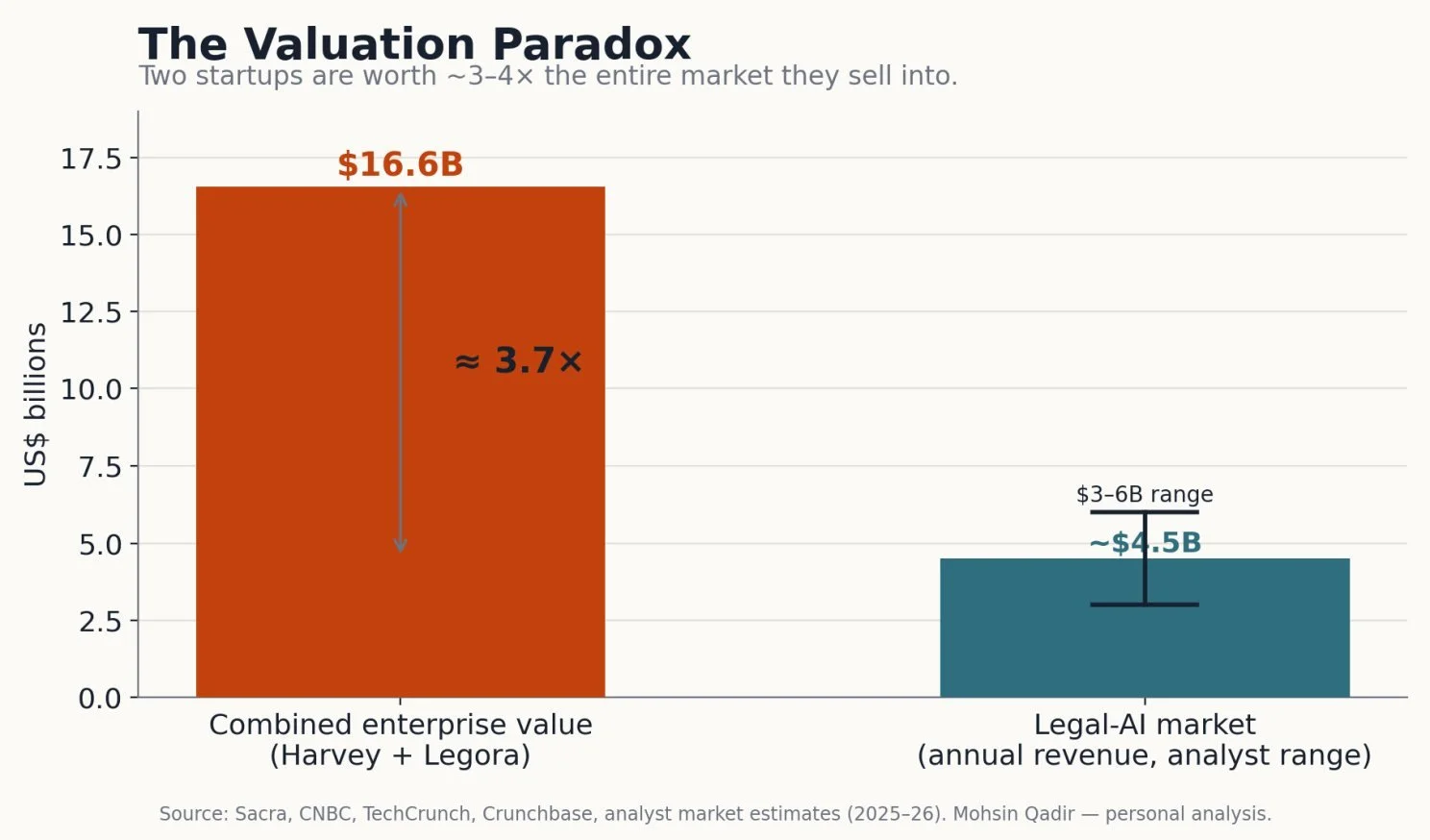
Figure 1 The valuation paradox: combined enterprise value versus the whole market's annual revenue.
I have built and torn apart enough models in my career to know this is not automatically damning. Markets get priced on where they are going, not where they are, and legal AI is growing at 20 to 28 percent a year on most estimates. If you squint, you can construct a story where the market 10x's and today's prices look cheap. Venture investors are explicitly buying that story, and some of them are very smart.
But here is the discipline I would apply if this landed on my desk as an investment-committee paper: a valuation that exceeds the size of its own market is not a forecast, it is a bet that these specific companies will both define and dominate a market that does not really exist yet while being attacked from two directions at once. That is a very particular kind of bet. And the people making it are, in my experience, underpricing the second half of that sentence.
A thirteen-month fairy tale
The speed is the part that should make you pause. Harvey went from a 3 billion dollar valuation in February 2025 to 11 billion in March 2026. Legora went from 675 million dollars in May 2025 to 5.55 billion ten months later an eight-fold re-rating in under a year.
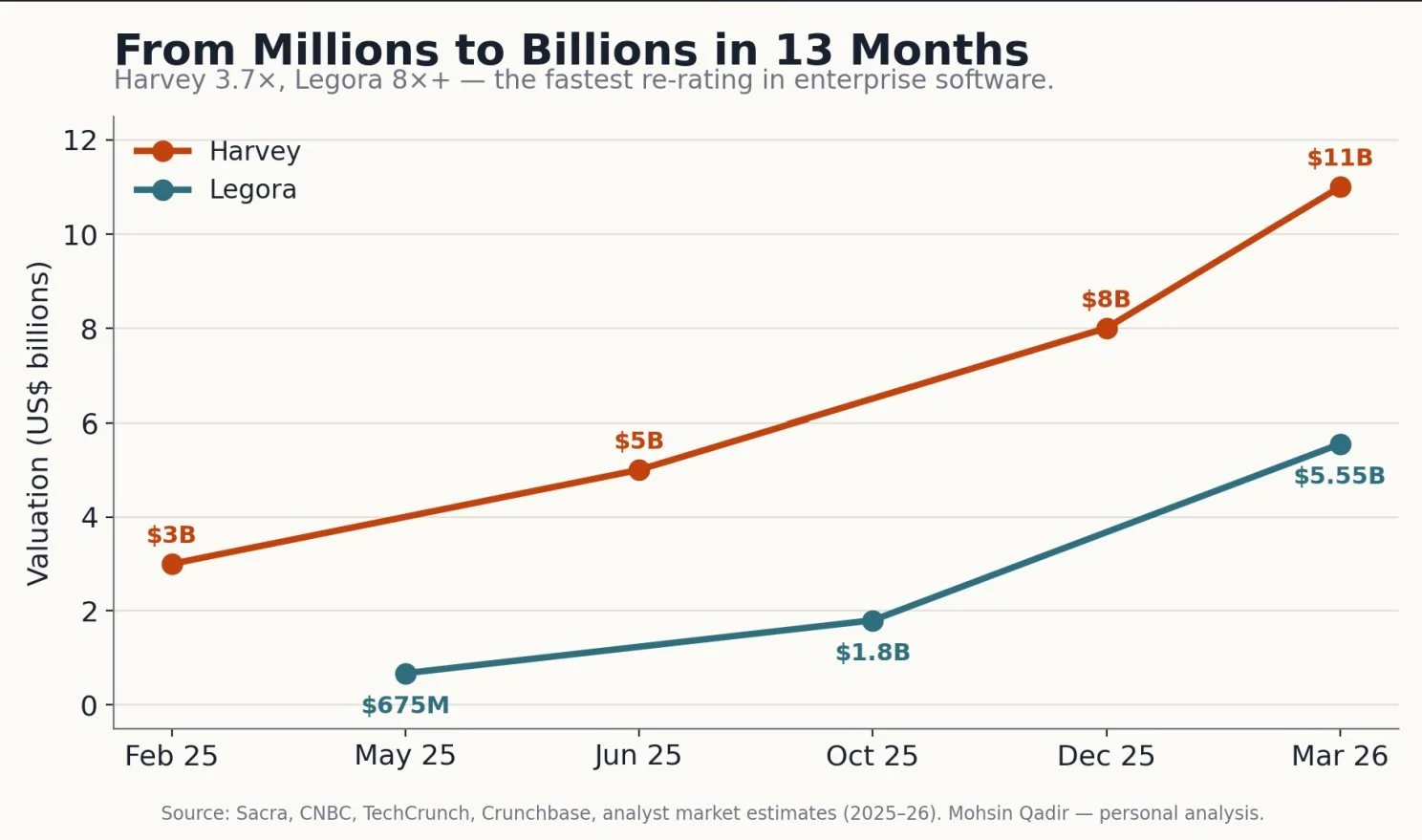
Figure 2 From millions to billions in thirteen months. This is the texture of a land-grab, not a profit pool.
I have lived through enough cycles to recognise the texture of this. It is the texture of a land-grab, not a profit pool. When valuations move this fast they are not tracking cash flows; they are tracking the fear of missing the category winner. Every fund wants to own the OpenAI of legal. Nobody wants to be the partner who passed on it. That dynamic produces extraordinary funding Harvey and Legora together raised three-quarters of a billion dollars within fifteen days of each other and it produces extraordinary prices. What it does not produce, on its own, is a moat. And a moat is precisely what this category is missing.
The treadmill nobody mentions
There is a second thing the growth charts hide. These companies are priced on expansion, and expansion runs on a treadmill. The reported business model is seat-based, and the engine of growth is land-and-expand: get in with a pilot cohort, then watch the seat count climb. Harvey has reportedly seen its median customer seat count double within twelve months. That is a beautiful number when you are raising money.
But sit with it as an operator and the picture turns. Expansion ARR depends on continuously adding seats in a market where the alternative a horizontal model at a fraction of the price is getting cheaper and better every quarter. The first seats capture the dense, high-value work and earn their keep. The marginal seat reaches a lower-value user who could, frankly, do the same task in Claude or Copilot for a twentieth of the cost. So the very metric that flatters the growth story is also the metric most exposed to commoditisation from below. Add the reality that renewal rates have reportedly been climbing, and you have a model that looks like hyper-growth on the way up and like a renegotiation waiting to happen on the way to maturity.
The uncomfortable truth: it is a three-front war
Here is the framing I keep coming back to, and the one I think investors and strategy teams should tattoo on their whiteboards. Specialist legal AI is not fighting one war. It is fighting three at once, and it is structurally outgunned in two of them.
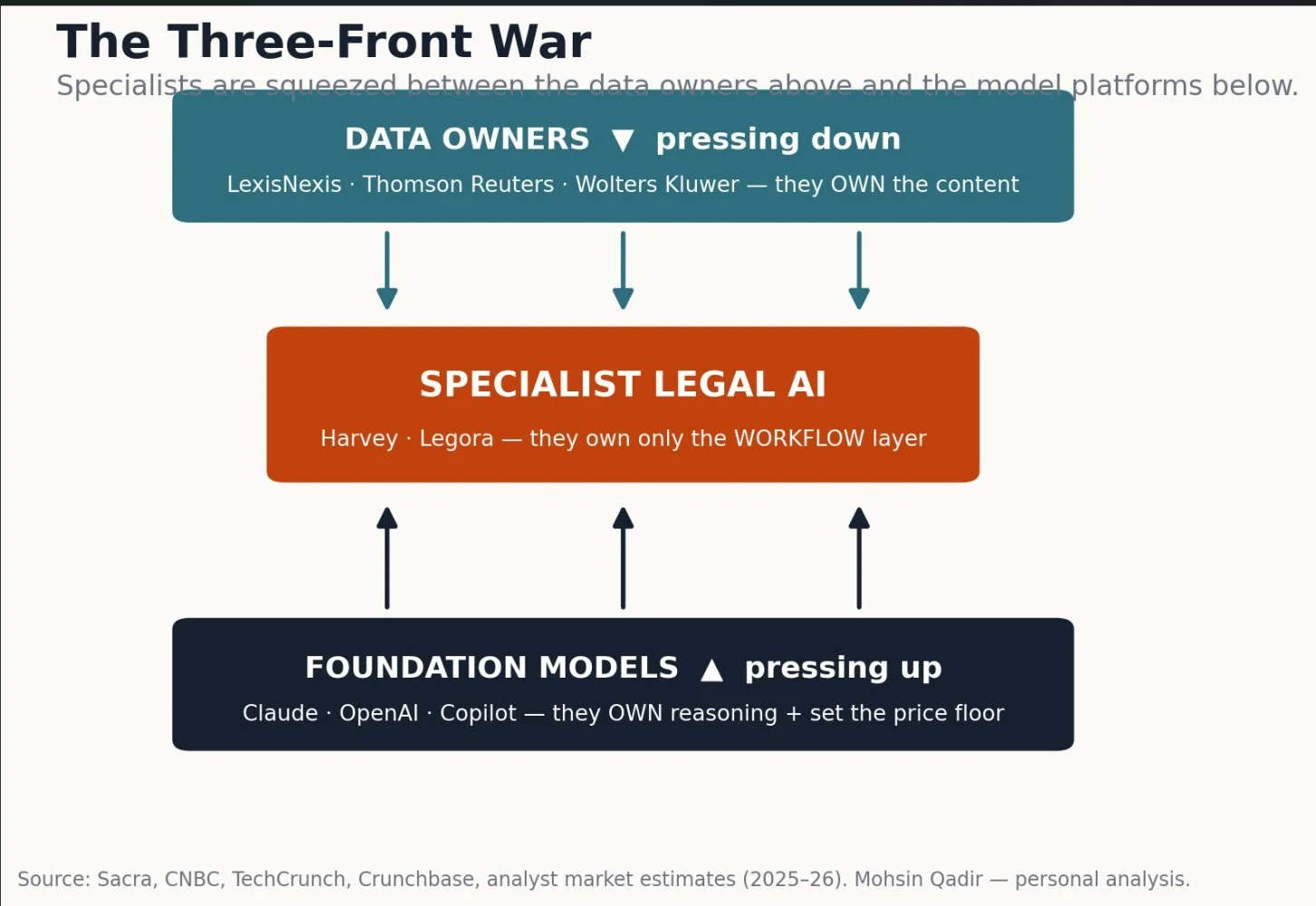
Figure 3 Squeezed from above by the data owners and from below by the foundation models.
Press down from above: the data owners. LexisNexis, Thomson Reuters, Wolters Kluwer. These firms own something no model can hallucinate into existence decades of curated, verified, citable legal content. Case law. Shepard's. KeyCite. Practical Law. When a regulator or a court is on the line, the model said so is not a defence; here is the verified citation is. The incumbents are now bolting AI on top of content they already own, from a position of trust that took a century to build. Independent testing has even shown their citation-grounded tools hallucinating materially less than the model-only alternatives which, in regulated work, is the whole ballgame.
Press up from below: the foundation models. Claude, OpenAI, Microsoft Copilot. These are the companies that own the actual reasoning engine and here is the kicker too few people register: the specialists run on top of them. Legora is built largely on Claude. Harvey orchestrates Anthropic's and OpenAI's models and, tellingly, scrapped its own fine-tuned legal model in 2025 when the frontier models simply got good enough to make it redundant. The supplier is now also the competitor. And that supplier has a bigger balance sheet, owns the price floor, and ships directly to the end customer through plug-ins.
That leaves the middle. And the middle is where the specialists actually live.
So what do they actually own?
This is the question I would put to any founder or any investor in the space, and I would want a straight answer: strip away the model you rent and the content you license, and what is genuinely yours?
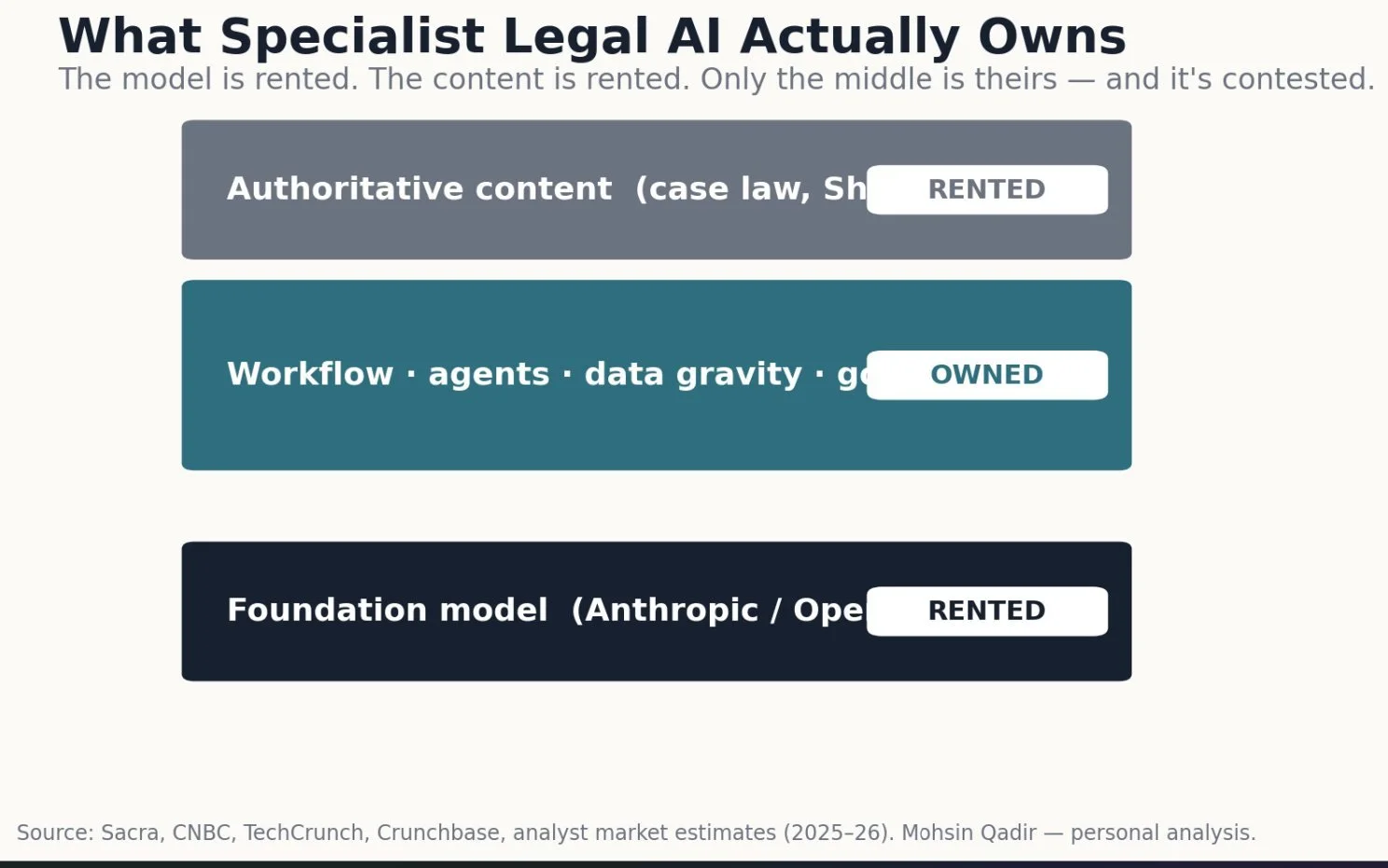
Figure 4 The model is rented. The content is rented. Only the middle is owned and it is contested.
The honest answer is the workflow layer. The agents. The encoded know-how. The data gravity of a thousand matters run inside the platform. The governance and audit scaffolding. The collaboration surface. That is real value I do not want to be glib about it. Encoding how a firm actually reviews a credit agreement, and turning it into a reusable agent, is genuinely useful, and switching away from it is genuinely painful.
But notice what has happened. The two layers with the most durable economics proprietary content and the raw model are the two layers the specialists do not own. They rent both. Harvey's much-celebrated authoritative content is licensed from LexisNexis, a company that is simultaneously its investor and, through its own Protégé product, its competitor. Sit with the strangeness of that: your differentiator versus the foundation models is a capability you lease from a firm that also sells the competing product directly. I cannot think of many great franchises built on two rented floors and one owned mezzanine.
But is it actually a bubble? The honest counter-case
Now let me argue against myself, because the bear case has a glaring weakness too, and I have watched smart people get this wrong in the opposite direction.
When the market wiped 50 billion dollars off the incumbents in February, the implicit claim was that a plug-in had killed the moat. That was lazy. The data owners' content is not replicable by a model. The verification layer still matters enormously in regulated and high-stakes work. And a Claude plug-in still requires enterprise licensing, careful configuration, and a human in the loop before it touches anything that matters. The smarter voices in legal tech called the sell-off what it was: an overreaction.
And the specialists are not sitting still. Harvey has tens of thousands of custom workflows built on its platform, real adoption across half the AmLaw 100, deepening governance tooling, and a determined land-grab into corporate in-house teams banks, dozens of asset managers where the buyer cares more about capacity and risk reduction than about which model sits under the hood. Legora has carved out genuine strength in Europe, where data residency and multi-jurisdictional nuance actually matter. These are not Potemkin companies. They are real businesses with real revenue Harvey reportedly near 300 million dollars of ARR, Legora around 100 million growing at rates most founders would sacrifice a limb for.
So the truthful position is not this is a bubble. It is more interesting and more useful: this is a category where the value is real but the value capture is contested, and the current prices assume the contest is already won. It is not.
What makes them sticky and what makes them survive
Stickiness and survival are not the same thing, and conflating them is where I see most analysis go wrong.
What makes them sticky, today, is the switching cost a customer accumulates by going deeper. A lawyer using the assistant for summaries can leave tomorrow Claude does that, cheaper. But a firm that has encoded its precedent, built custom agents on its own templates, wired the platform into its document-management system, and shares workspaces with external counsel is not leaving casually. Here is the subtle, almost philosophical point: the stickiness lives in the customer's own configuration, not in the vendor's technology. The moat is built out of the buyer's effort. Which is exactly why it can also be carried out the door if the buyer insists on portability.
What makes them survive is different, and harder. Survival, over a three-to-five-year horizon, requires owning at least one of the two layers they currently rent or owning a distribution surface so dominant that it does not matter. The cloud-computing analogy is the one I find most useful. The underlying compute became a cheap, interchangeable utility. The durable money went to whoever owned the workflow, the data, the integrations, and the distribution on top. Legal AI is heading to the same place: the model becomes a utility, and the only question that matters is who owns the layer that sits on top of the utility and refuses to commoditise.
What they should actually do
If I were advising one of these companies as an observer, not an insider, I would be pushing four moves, hard.
First, own a layer or die renting. Buy, build, or exclusively lock up proprietary content and a verification capability the foundation models cannot replicate. The entire post-February panic was about verifiable, citable truth. Whoever owns that in a model-native form owns the regulated segment. Renting it from LexisNexis is not a strategy; it is a countdown.
Second, go vertical before the horizontals go specialist. The foundation models are general by design; their weakness is depth in a single domain's workflow, data, and compliance reality. Financial services. Insurance. Life sciences. The specialists should be racing to own a vertical so completely the data, the regulatory map, the integrations, the bespoke agents that a horizontal plug-in cannot follow. Harvey's push into financial services is exactly this instinct, and it is the right one.
Third, integrate the threat, do not deny it. The smartest move I have seen is the specialists wiring themselves into the very model platforms that threaten them multi-model selectors, open connector standards so that when Claude or GPT improves, the specialist rides the improvement instead of being killed by it. You cannot out-compute Anthropic or OpenAI. You can make yourself the best place to consume them for legal work.
Fourth, sell the outcome, not the seat. The hardest question any of these companies will face at renewal is the CFO question: what did this actually save me? The survivors will be the ones that can prove outside-counsel deflection and cycle-time reduction in hard numbers because the moment the horizontals are good enough, the only defence of a premium price is a provable, premium return.
If you are writing the cheque or signing the contract
For the investors and strategy people reading this, the practical takeaways diverge. If you are underwriting one of these companies, the diligence question is not how fast is it growing it is which layer do they own, and what happens to that growth when the horizontal alternative is half as good at a twentieth of the price. Model the expansion treadmill and the renewal escalation, not just the headline ARR. Ask what is rented and what would happen if the landlord raised the rent or competed directly because in Harvey's case, the landlord already does.
And if you are a buyer a general counsel, a COO, a head of legal operations the asymmetry runs in your favour and most buyers are not using it. The rivalry between the specialists, the data owners, and the foundation models is leverage. Treat the model layer as a contestable commodity. Make portability of your agents and playbooks a contract term, so the configuration you build is yours and not a leash. Pay the premium only where bespoke depth and verifiable content genuinely earn it, and let the horizontal you almost certainly already own handle the commodity work. The most expensive mistake in this market is not picking the wrong vendor; it is paying a premium-platform price for commodity-layer work.
My verdict and the part you will want to argue with
Here is where I will plant a flag, and I fully expect the comments to disagree.
I do not think Harvey or Legora is going to zero. I think both are real companies that will matter. But I also think today's prices embed an assumption that the specialist middle layer is a durable, defensible, winner-take-most moat that the structure of this market does not support. The model is a utility. The content is owned by someone else. The middle is contestable by definition. When the market works that out, I would expect a re-rating in the specialists and, ironically, a quiet re-rating upward in the data owners that everyone left for dead in February because owning the verifiable truth turns out to be the most defensible position in the entire stack.
The contrarian summary: in legal AI, the companies the market is most excited about own the least defensible layer, and the companies the market just punished own the most defensible one. If that is right, a lot of capital is currently pointed in exactly the wrong direction.
I might be wrong. I have been wrong before, and this market is moving faster than any I have watched. But that is the bet I would want to stress-test before writing a nine-figure cheque into a company worth more than its own market.
Tell me where I have got this wrong. I am genuinely curious who you think owns the legal AI stack in 2030 the model, the content, or the workflow. Because they cannot all win.
Last week, I took the same scalpel to Harvey in financial services specifically whether a horizontal-legal champion can win the one vertical it arguably needs most, what that means for the banks and asset managers buying it, and whether “Harvey for FS” is a moat or a marketing slide. Follow along if that is your kind of argument.
Mohsin Qadir
Disclaimer: These are my personal views and opinions only. They do not represent the views of my employer or any organisation I am affiliated with, and they are based solely on publicly available information. Nothing in this article is investment advice, or a recommendation to buy, sell, or hold any security or product. Companies are named for analysis and commentary purposes.
legal AI, legaltech, Harvey AI, Legora, CoCounsel, LexisNexis, Thomson Reuters, generative AI, agentic AI, large language models, foundation models, Claude, OpenAI, vertical SaaS, AI moat, defensibility, enterprise AI, AI valuations, competitive strategy, venture capital, private equity, market structure, due diligence.
Frequently asked questions
Is legal AI a bubble?
Mohsin Qadir's view is that the value is real but the value capture is contested. Harvey and Legora are real businesses, with Harvey reportedly near $300 million of ARR. Their prices assume they'll own a durable, winner-take-most layer, while the models and the legal content they depend on belong to other companies.
Why did Thomson Reuters and RELX shares fall in February 2026?
On 3 February 2026 Anthropic added legal capabilities to Claude. Thomson Reuters fell around 18%, RELX had its steepest one-day fall since 1988 and Wolters Kluwer lost roughly 13%, about 50 billion dollars of value in all. Qadir calls it an overreaction, because a model can't replicate verified, citable legal content.
What should a buyer of legal AI put in the contract?
Treat the model layer as a commodity and make portability of your agents and playbooks a contract term, so the configuration you build stays yours. Pay a premium only where bespoke depth and verified content earn it, and let the general AI tool you already own handle routine work. The costly mistake is paying platform prices for commodity tasks.
KauserOS goes deep in one vertical, fund finance, holding each agreement's terms once with clause-level evidence behind them. See how the KauserOS platform works.
About the author
Mohsin Qadir is the founder of KauserOS, an AI-native operating platform for private equity and private credit managers. He was divisional CFO and COO of Private Assets at Fidelity International and interim Head of Investment Operations at Bridgepoint, and earlier worked at ICG and BNP Paribas CIB. He writes RoSoft Notes.